Why Does My Air Fryer Smoke When Cooking? (6 Easy Fixes)
Note: If you buy through links on our site, we may earn an affiliate commission at no extra cost to you. How this works.
- Pour off fat from the drawer during fatty cooks
- Clean the basket, drawer and heating element after use
- Pat wet or marinated food dry before cooking
- Press breading on firmly so crumbs do not fly
- Unplug at once if smoke turns dark or black
Is air fryer smoke normal?
A little white haze can be normal, especially with fatty or wet food. Philips says white smoke from its air fryers does not harm the appliance or the cooking.
Steam and smoke look similar. Steam rises fast, has no smell and clears in seconds. Smoke lingers and smells oily or burnt.
Dark or black smoke is different. It means food is burning or something electrical is wrong. Stop the cycle, unplug the unit and let it cool before you open it.
Why does my air fryer smoke when cooking?
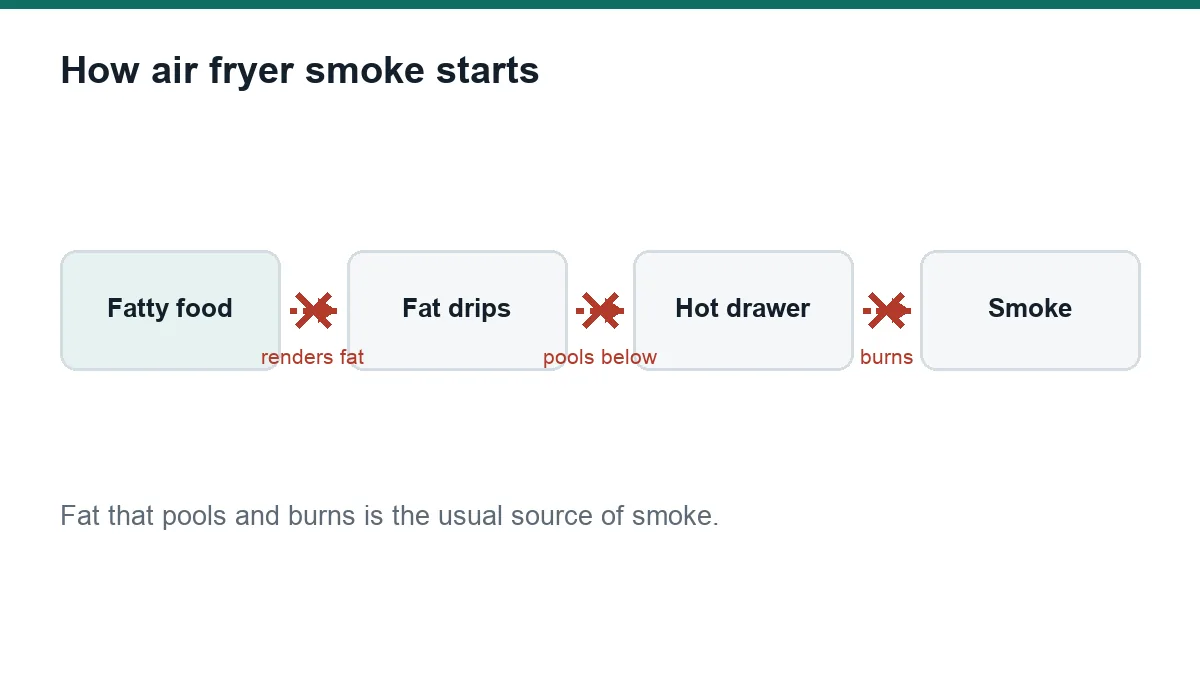
The fan in an air fryer blows very hot air around the food. Anything that drips or flies loose can hit a hot surface and smoke. These are the common causes.
- Fatty food: bacon, sausages, wings and burgers release fat that pools in the drawer and burns.
- Old grease: fat left in the drawer or on the element from earlier meals heats up again.
- Wet or marinated food: liquid splatters onto hot parts and burns.
- Loose breading: thin crumbs blow around and char on the element.
- Light food hitting the element: Philips notes that strong airflow can lift light items, like thin bread or chips, up to the heater.
- Too much oil: extra oil drips off and smokes, and some oils smoke at lower heat than others.
New air fryers can also give off a light smell or haze on the first few uses. That usually fades once the factory coating burns off.
How to stop air fryer smoke step by step
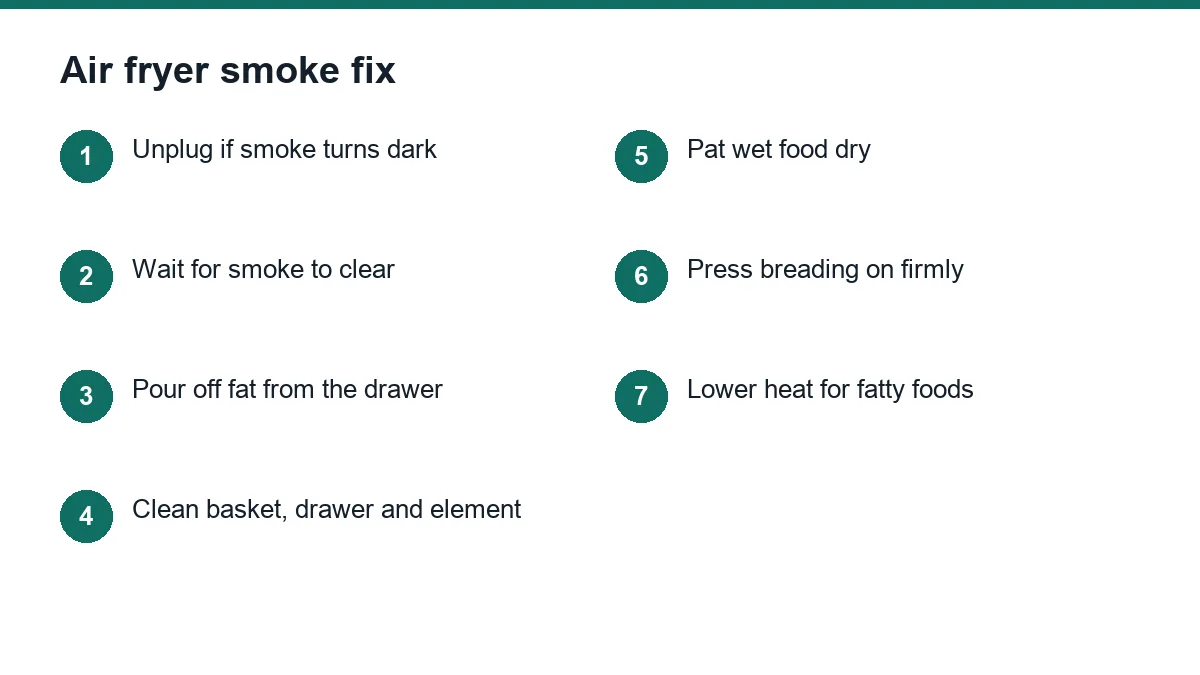
Step 1: Stop and unplug if the smoke is dark
Press stop and unplug the cord. Wait for the smoke to clear before you pull out the basket. Never pour water into a hot air fryer.
Step 2: Remove the extra fat
Once it is safe, carefully pour off fat from the drawer or soak it up with paper towels. For very fatty foods, Philips suggests emptying fat from the drawer partway through cooking.
Step 3: Clean the drawer, basket and element
Let the unit cool fully. Wash the basket and drawer, then wipe the heating element gently with a damp cloth, following your manual. The guide on how to clean an air fryer safely covers each part.
Step 4: Prepare the food better
Pat wet or marinated food dry with a paper towel. Press breading on firmly. Use a light coat of oil, not a pool of it.
Step 5: Lower the heat for fatty foods
If bacon or wings still smoke, drop the temperature a little and cook a few minutes longer. Cooler air means less fat burning in the drawer.
Step 6: Do not overfill the basket
Cook in one even layer and leave space for air to move. Food piled high sits closer to the element and burns faster.
Still not working? What to check next
If smoke continues after a full clean, look for these less common problems.
- Food stuck to the element: look at the heater from below once the unit is cold. Remove any stuck bits with the method your manual allows.
- Missing accessory: some models come with a fat reducer or drip insert. Philips says to always use it with fatty food.
- Damaged nonstick coating: peeling or flaking coating can burn and should not be used.
- Wrong size for your batches: a basket that is always crammed full will smoke more. Our guide to the right air fryer size helps you match capacity to your meals.
Stop using it if it smokes when empty and clean, sparks, melts, smells of burning plastic or trips your breaker. Contact the maker’s support line, especially while it is under warranty.
Common mistakes to avoid
- Opening the drawer in thick smoke: wait for it to clear, or you may get a face full of hot fumes.
- Pouring water in to stop smoke: water on hot fat can spatter and burn you.
- Skipping drawer cleaning: old grease is one of the most common smoke sources.
- Spraying aerosol oil on the basket: many makers warn it can damage the nonstick coating.
- Using parchment without food on top: loose paper can lift into the element.
- Running it under a cabinet: leave space around the vents, as your manual directs.
Smoke is just one problem. If food also browns in patches, read why your air fryer is not cooking evenly.
Which foods smoke the most in an air fryer?
High fat cuts smoke most, such as bacon, sausages, chicken skin and fatty ground meat. Cheese can also smoke if it melts and drips.
Lean foods like vegetables, fish fillets and frozen fries rarely smoke when the drawer is clean. For ideas that cook cleanly, see the list of foods to cook in an air fryer. More guides sit in the air fryer help hub.
Products for this job
From our buying guides and reviews. We have not tested these ourselves; check the specs and the reviews on Amazon before you buy.
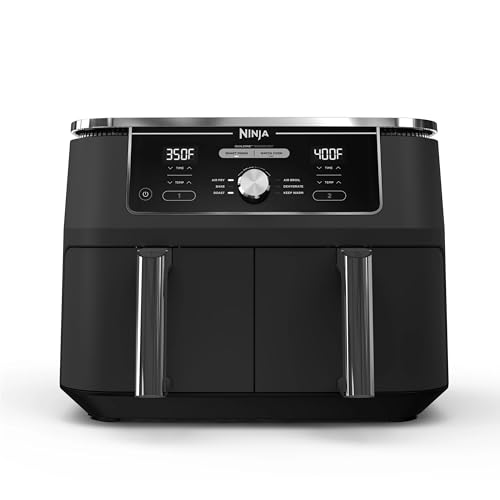 Ninja DZ401 Foodi 10-Quart 6-in-1 DualZone XL
 Cosori Pro II CP358-AF 5.8-Quart
 Instant Vortex Plus 6QT ClearCook
Frequently Asked Questions
Is it safe to keep cooking if my air fryer smokes?
Light white smoke from fatty food is usually safe once you pour off the fat. Dark or black smoke, sparks or a burning plastic smell mean you should stop, unplug the unit and let it cool.
Can I put water in the air fryer drawer to stop smoke?
Only do this if your exact manual allows it, because water on hot fat can spatter. A safer choice is to pour off fat carefully or soak it up with folded paper towels held in tongs during cooking.
Why does my new air fryer smoke the first time?
Many new appliances give off a light smell or haze while factory oils and coatings heat for the first time. Run it empty as your manual describes, and contact the maker if the smoke stays heavy.
Does the type of oil matter for air fryer smoke?
Yes, some oils start to smoke at lower temperatures than others. Use only a light coating and pick an oil suited to high heat, rather than adding more oil to fix food that comes out dry.